
Momoko Otani
Ceramist in Shigaraki, Japan
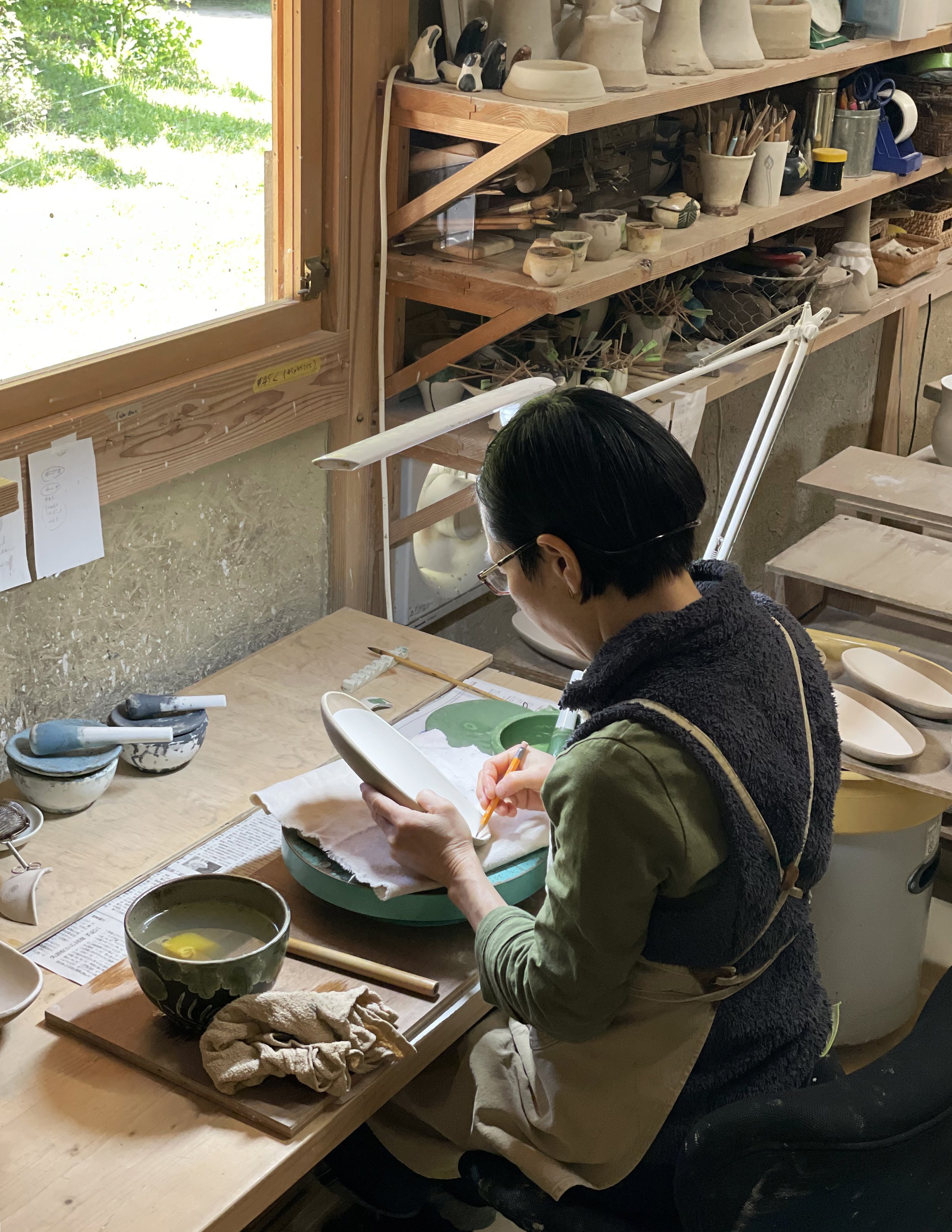
Otani Pottery Studio was created by Tetsuya and Momoko Otani in 2008. Located in Shigaraki, one of the 6 oldest pottery sites in Japan. The designs behind most of our works are developed from small ideas we come across in our daily lives.
Momoko Otani Instagram

6.5 in. (H) x 6.63 in. (W) x 4.25 in. (D)
3.38 in. ø mouth
weight: 1.6 lb.
Handmade in Shigaraki, Japan
Not suitable for dishwasher
Food safe glaze used on inner surface
Momoko Otani was born into a family of potters. She currently runs "Otani Seisakujo" with her husband, Tetsuya Otani, also a potter. They reside, with their three cats, in their home nestled in the mountains of Shigaraki.
Momoko's works are made of local clay, which is high in iron content, treated with slip, and she uses unique techniques, such as hand-painting and sgraffito. Her botanical patterns, such as lotus patterns and banana leaves, were inspired by her days in Indonesia, where she studied abroad while a student at Oregon State University.
Sgraffito is derived from the Italian word “scratch”. It is a technique of applying layers of slip onto a ceramic form and, while semi-dry, removing and etching certain areas to create a contrasting surface design. Momoko’s works are inspired by her love of lotuses and banana leaves. Her white sgraffito series display lotus buds and petals in bloom. Each piece is one-of-a-kind, featuring unique variations.

8.25 x 4.75 x 1.38 - 1.63 ( sides to ends lip height ) approx. 11 oz.
Handmade in Shigaraki, Japan
Not suitable for dishwasher
Food safe glaze used on inner surface
Momoko Otani was born into a family of potters. She currently runs "Otani Seisakujo" with her husband, Tetsuya Otani, also a potter. They reside, with their three cats, in their home nestled in the mountains of Shigaraki.
Momoko's works are made of local clay, which is high in iron content, treated with slip, and she uses unique techniques, such as hand-painting and sgraffito. Her botanical patterns, such as lotus patterns and banana leaves, were inspired by her days in Indonesia, where she studied abroad while a student at Oregon State University.
Sgraffito is derived from the Italian word “scratch”. It is a technique of applying layers of slip onto a ceramic form and, while semi-dry, removing and etching certain areas to create a contrasting surface design. Momoko’s works are inspired by her love of lotuses and banana leaves. Her white sgraffito series display lotus buds and petals in bloom. Each piece is one-of-a-kind, featuring unique variations
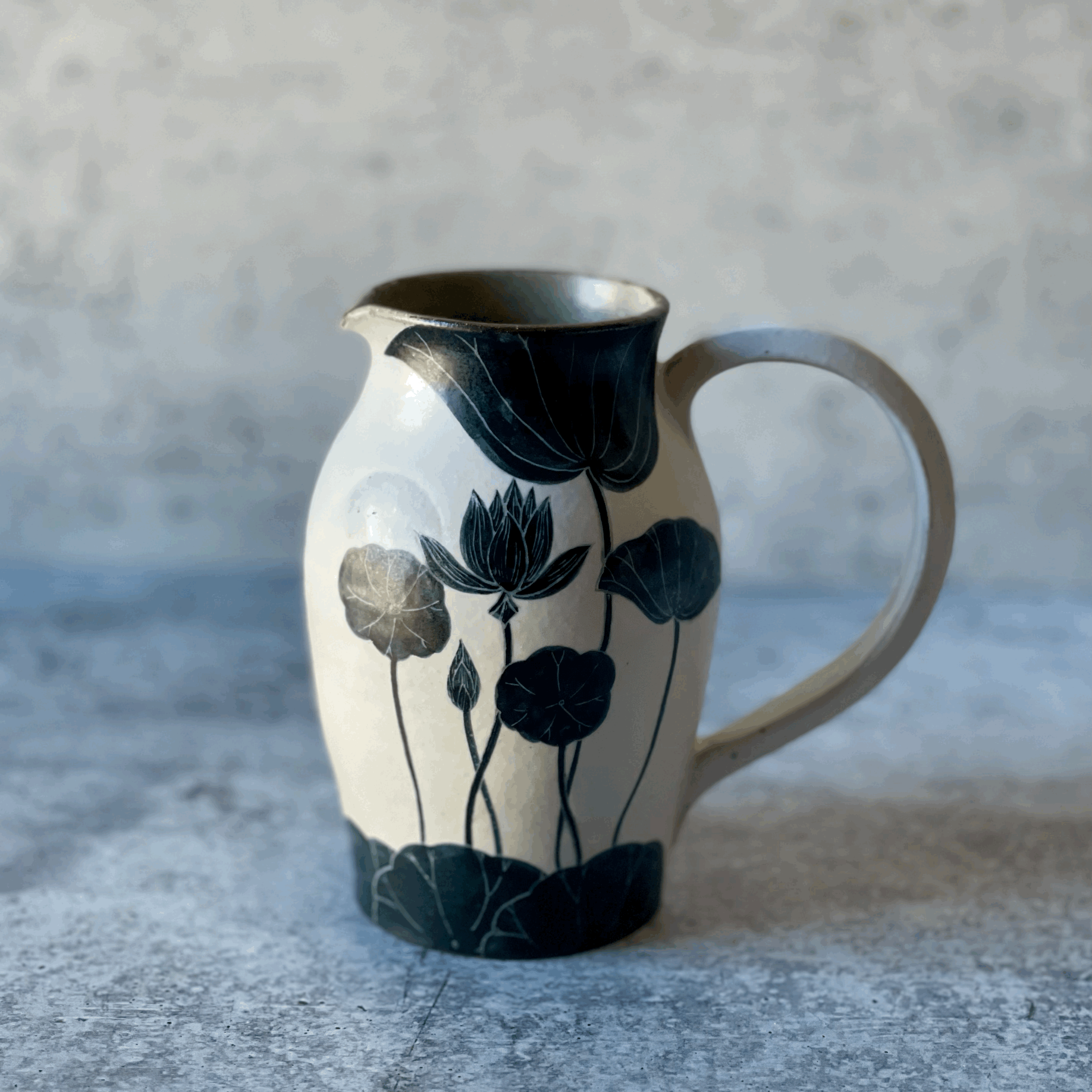
6.63 in. (H) x 7.38 in. (W) x 4.75 in. (D)
3.5 in. ø mouth
weight: 1.7 lb.
Handmade in Shigaraki, Japan
Not suitable for dishwasher
Food safe glaze used on inner surface
Momoko Otani was born into a family of potters. She currently runs "Otani Seisakujo" with her husband, Tetsuya Otani, also a potter. They reside, with their three cats, in their home nestled in the mountains of Shigaraki.
Momoko's works are made of local clay, which is high in iron content, treated with slip, and she uses unique techniques, such as hand-painting and sgraffito. Her botanical patterns, such as lotus patterns and banana leaves, were inspired by her days in Indonesia, where she studied abroad while a student at Oregon State University.
Sgraffito is derived from the Italian word “scratch”. It is a technique of applying layers of slip onto a ceramic form and, while semi-dry, removing and etching certain areas to create a contrasting surface design. Momoko’s works are inspired by her love of lotuses and banana leaves. Her white sgraffito series display lotus buds and petals in bloom. Each piece is one-of-a-kind, featuring unique variations.
5.25 x 5.25 x 0.5 -0.63 in. (side and corner lip dimemsions) approx. 7.1 - 7.3 oz.
Handmade in Shigaraki, Japan
Not suitable for dishwasher
Food safe glaze used on inner surface
Momoko Otani was born into a family of potters. She currently runs "Otani Seisakujo" with her husband, Tetsuya Otani, also a potter. They reside, with their three cats, in their home nestled in the mountains of Shigaraki.
Momoko's works are made of local clay, which is high in iron content, treated with slip, and she uses unique techniques, such as hand-painting and sgraffito. Her botanical patterns, such as lotus patterns and banana leaves, were inspired by her days in Indonesia, where she studied abroad while a student at Oregon State University.
Sgraffito is derived from the Italian word “scratch”. It is a technique of applying layers of slip onto a ceramic form and, while semi-dry, removing and etching certain areas to create a contrasting surface design. Momoko’s works are inspired by her love of lotuses and banana leaves. Her white sgraffito series display lotus buds and petals in bloom. Each piece is one-of-a-kind, featuring unique variations